Vetted prices every vendor in dollars, and follows it after you sign.
Expected loss replaces the risk score. Anyone can request a vendor from a link, vendors answer each question once, and conditions, renewals and offboarding are tracked on the same record.
What changed
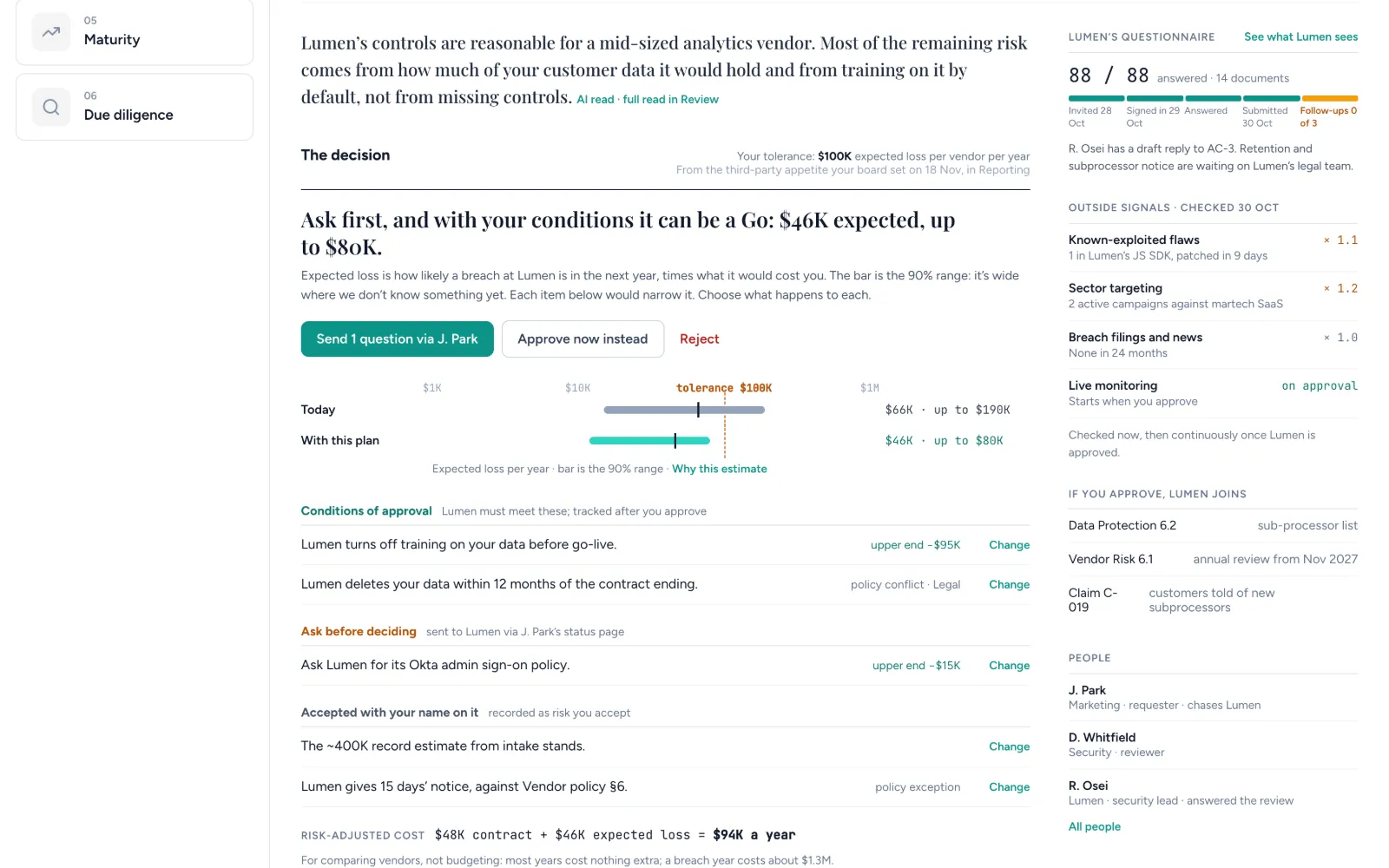
A vendor used to end in a residual risk score out of 100, approved if it came in under 70. Nobody could say what a 44 would cost, or what would change it. Vetted gives each vendor one record, priced in dollars against the risk your business has agreed to carry, and All vendors opens on what needs you this week.
Expected loss
How likely a breach at the vendor is this year, times what it would cost you, with the 90% range, next to the tolerance your board set in Reporting. Every unknown that widens the range is listed with what would narrow it.
Conditions
Each condition cites the policy clause it comes from and shows how much it moves the price. Reminders at 7 days and 1 day; a lapse comes back to you to extend, accept or suspend.
Requests
A request page you can send to anyone, branded for your company and signed in with SSO. Six short steps, prefilled from the vendor’s website and your identity provider. Coupa and Zip requests skip the form.
Vendor portal
Questions that ask the same thing are linked, so the vendor answers once. Vendors see which answers won’t meet your requirements before they submit.
AI posture
Posture from the AI Sub-Processor Register now prices into the vendor’s expected loss, and can become a condition of approval.
AI register
Now under Vendors, with its own place in the menu. It shows which model providers your critical vendors depend on, and what breaks if one goes down. Obligations are grouped by why each rule applies to you, and an AI finding a vendor genuinely needs can be accepted through the same exception process as your policy clauses.
After approval
Renewals start before the notice date with last year’s answers carried forward. Offboarding confirms access removal from your identity provider and certifies deletion.
Incidents
On Enterprise, a vendor incident shows the chance it reached your data and the expected loss against your tolerance, and who needs to act.
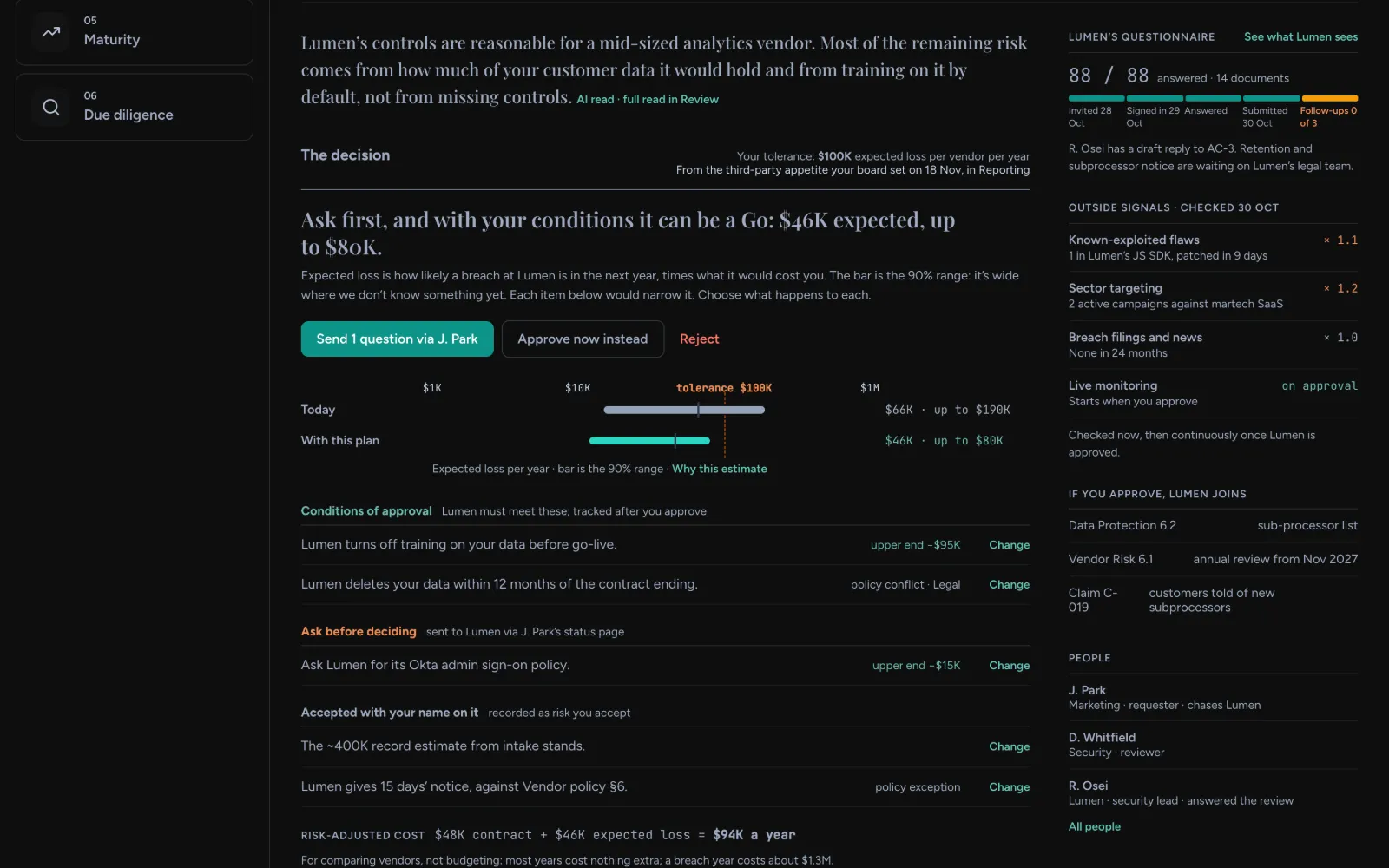
FIG. 1The decision for Lumen. $66K expected today, $46K with the conditions, against a $100K tolerance.
Why it matters
A score tells you whether a vendor looks better or worse than the last one. It can’t tell you what signing it costs, because it ignores what you’re handing over: how much of your data, what kind, and how much of the business depends on it.
A price can. Put it next to the tolerance your board agreed, show what would bring it down, and the decision takes minutes instead of a week of back and forth. Because conditions are tracked after the signature, a conditional approval means something.
Availability
Available now on every plan. Incident monitoring and live outside signals are on Enterprise. Open it at Business Controls → Vendors.
Every vendor, assessment, answer, file, contract and AI posture carries over. Old assessment links redirect to the vendor’s record. The residual score is still calculated during the transition and shown beside expected loss.
Known limitations
Until your board sets a third-party appetite in Reporting, tolerance is derived from your business context, and the record says so.
Plans below Enterprise check outside signals at request, review and renewal, not continuously.